
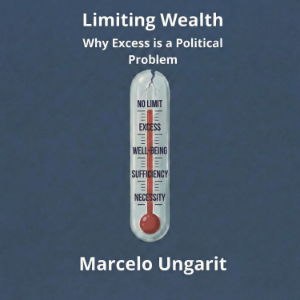
Limiting Wealth
Marcelo Ungarit
This audiobook is narrated by a digital voice.
This book poses an uncomfortable and urgent question: why do we accept limits on almost everything—wages, deficits, emissions, resources—but not on extreme wealth? Limitarianism is based on an idea that is both simple and radical: in democratic societies, the limitless accumulation of wealth is not a neutral right, but a profound political, moral, and social problem. When a few concentrate too much economic power, the liberty and equality of everyone else are weakened, even if absolute poverty decreases.
Throughout its chapters, the book dismantles the false opposition between fighting poverty and curbing excess. It argues that both phenomena are two sides of the same systemic coin and that it is not enough to guarantee a minimum floor if we do not also establish a reasonable ceiling. From an accessible and well-documented perspective, the text analyzes the philosophical roots of limitarianism—paying special attention to the ideas of Ingrid Robeyns—as well as the psychological, cultural, and economic factors that sustain the obsession with accumulating more than necessary.
The text brings the debate down to earth, addressing common objections: whether setting limits disincentivizes effort, threatens innovation, or leads to forced egalitarianism. In response to these fears, it proposes a clear framework: it is not about making everyone equal, but about preventing the excess of a few from degrading democracy and our shared life. Along the way, the book explores the direct link between limiting wealth and enabling policies such as Universal Basic Income (UBI), viewing them as interconnected vessels of the same social justice project.
Duration - 4h 37m.
Author - Marcelo Ungarit.
Narrator - Digital Voice Madison G.
Published Date - Thursday, 29 January 2026.
Copyright - © 2026 Moises Moran Vega ©.
Location:
United States
Networks:
Marcelo Ungarit
Digital Voice Madison G
Moisés Morán Vega
English Audiobooks
INAudio Audiobooks
Description:
This audiobook is narrated by a digital voice. This book poses an uncomfortable and urgent question: why do we accept limits on almost everything—wages, deficits, emissions, resources—but not on extreme wealth? Limitarianism is based on an idea that is both simple and radical: in democratic societies, the limitless accumulation of wealth is not a neutral right, but a profound political, moral, and social problem. When a few concentrate too much economic power, the liberty and equality of everyone else are weakened, even if absolute poverty decreases. Throughout its chapters, the book dismantles the false opposition between fighting poverty and curbing excess. It argues that both phenomena are two sides of the same systemic coin and that it is not enough to guarantee a minimum floor if we do not also establish a reasonable ceiling. From an accessible and well-documented perspective, the text analyzes the philosophical roots of limitarianism—paying special attention to the ideas of Ingrid Robeyns—as well as the psychological, cultural, and economic factors that sustain the obsession with accumulating more than necessary. The text brings the debate down to earth, addressing common objections: whether setting limits disincentivizes effort, threatens innovation, or leads to forced egalitarianism. In response to these fears, it proposes a clear framework: it is not about making everyone equal, but about preventing the excess of a few from degrading democracy and our shared life. Along the way, the book explores the direct link between limiting wealth and enabling policies such as Universal Basic Income (UBI), viewing them as interconnected vessels of the same social justice project. Duration - 4h 37m. Author - Marcelo Ungarit. Narrator - Digital Voice Madison G. Published Date - Thursday, 29 January 2026. Copyright - © 2026 Moises Moran Vega ©.
Language:
English
Title Page
Duration:00:00:12
PROLOGUE
Duration:00:05:53
INTRODUCTION
Duration:00:04:54
CHAPTER 1
Duration:00:11:51
CHAPTER 2
Duration:00:15:10
CHAPTER 3
Duration:00:13:04
CHAPTER 4
Duration:00:11:29
CHAPTER 5
Duration:00:13:45
CHAPTER 6
Duration:00:11:49
CHAPTER 7
Duration:00:12:11
CHAPTER 8
Duration:00:12:31
CHAPTER 9
Duration:00:15:07
CHAPTER 10
Duration:00:12:23
CHAPTER 11
Duration:00:13:53
CHAPTER 12
Duration:00:11:30
CHAPTER 13
Duration:00:11:25
CHAPTER 14
Duration:00:11:34
CHAPTER 15
Duration:00:10:32
CHAPTER 16
Duration:00:12:58
CHAPTER 17
Duration:00:11:16
CHAPTER 18
Duration:00:12:46
CHAPTER 19
Duration:00:11:25
EPILOGUE
Duration:00:06:22
APPENDIX I
Duration:00:08:16
APPENDIX II
Duration:00:13:06
Further Reading: I, King Trump
Duration:00:01:41
Also By Marcelo Ungarit
Duration:00:00:13